After Dark, After Hours: The Tokyo Artists Turning Forgotten Walls Into Galleries
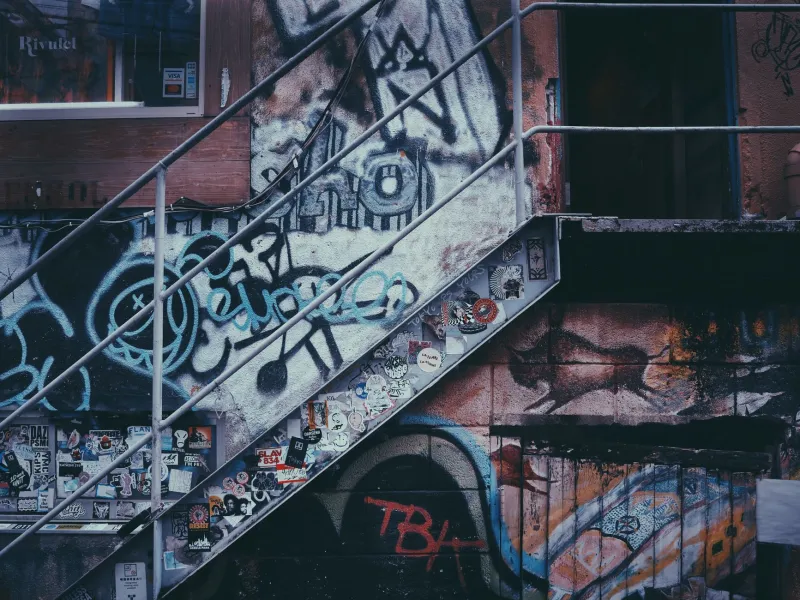
The underpass in Koto Ward doesn't look like much during the day. Concrete pillars, a few faded municipal notices, the distant sound of a highway overhead. But at 2 a.m. on a Thursday in late October, it becomes something else entirely — a temporary gallery that exists for exactly as long as its creators decide to let it.
By sunrise, most of it will be gone.
This is Tokyo's underground art scene in its most literal form: work made in the dark, for an audience that often doesn't know it's an audience until it stumbles onto something unexpected during a morning commute.
The City as a Canvas Nobody Agreed to Lend
Tokyo is not a city that tolerates visual chaos. Walk through almost any neighborhood and you'll notice the absence of the kind of layered, accumulated street art that defines cities like New York, Berlin, or LA. Surfaces here are maintained. Graffiti is removed quickly. Unauthorized installations in public spaces are treated as litter rather than art.
And yet — if you know where to look, or you're lucky enough to turn a corner at the right moment — there's a persistent, adaptive creative underground that keeps finding the gaps.
"Tokyo pushes back hard, so you have to move fast and think differently," says Ren, a 29-year-old visual artist who works under a pseudonym and has been part of several collectives operating in and around the city for the past five years. "Permanence isn't the goal. The goal is the moment when someone sees it and something shifts in their head."
Collectives, Not Crews
What makes Tokyo's underground art scene distinct from the graffiti-heavy movements Americans might associate with cities like Baltimore or Philadelphia is its organizational structure — or deliberate lack of one. These aren't tight-knit crews with territorial affiliations and signature tags. They're loose, rotating collectives that form around specific projects and then dissolve, reform, and shift membership fluidly.
One collective, which operates under a name that roughly translates to "temporary residents," focuses exclusively on spaces that are scheduled for demolition or redevelopment. They document the site, create work that responds to its history, install it overnight, and then photograph everything before it disappears — sometimes under their own erasure, sometimes because the bulldozers arrive first.
"We're not trying to vandalize anything," explains a member who goes by Shio. "We're trying to give these places a last conversation. Most of Tokyo's old neighborhoods are getting wiped out and replaced with something generic. We want to mark that. Even if only fifty people ever see it."
Pop-Up Galleries in Plain Sight
Not all of the movement operates in pure darkness or legal ambiguity. A growing subset of Tokyo's underground art world has figured out how to work in the open by moving faster than regulation can catch up.
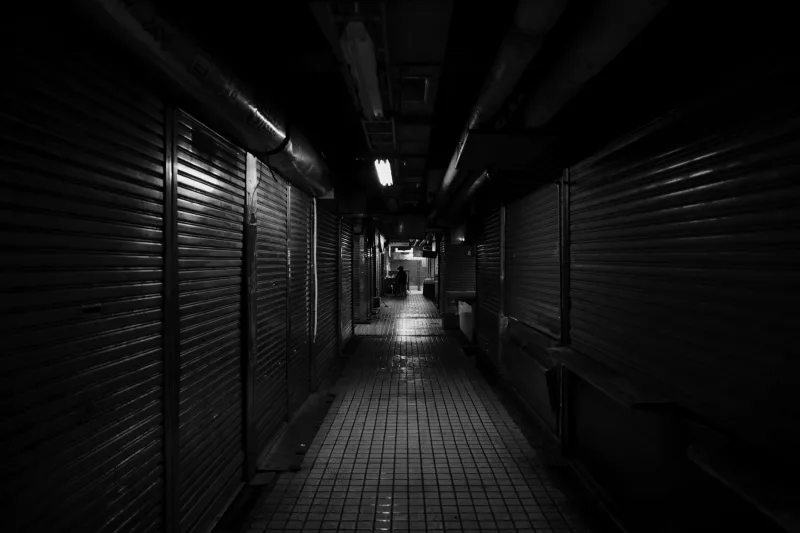
Pop-up galleries materialized in empty storefronts across Shimokitazawa and Sangenjaya, running for a single weekend before the space is reclaimed. Installations appear inside train station underpasses during the brief window between the last train and the first — a few hours when the city's most trafficked infrastructure is technically unoccupied. Some artists have started embedding work into the city's texture so quietly that it's indistinguishable from official public art until you look closely enough to notice there's no plaque, no permit number, no institutional signature.
For American visitors familiar with the pop-up culture back home, the Tokyo version operates on a different frequency. There's no Instagram countdown, no influencer pre-announcement, no merch table. The discovery is the entire point.
The Tension Is Real
It would be easy to romanticize all of this, and plenty of coverage from outside Japan does exactly that — framing Tokyo's underground artists as heroic rebels thumbing their noses at an authoritarian visual order. The reality is messier and more interesting.
Many of the artists involved have genuine anxiety about what they're doing. Tokyo's regulations around public space aren't arbitrary — they reflect real community values around shared visual environments and civic responsibility. Several artists we spoke to described internal debates within their collectives about what constitutes meaningful intervention versus what's just self-indulgent disruption.
"I grew up here," says Ren. "I love this city. I'm not trying to trash it. But I also think there's something lost when every surface is controlled and approved and sanitized. I want Tokyo to look like it's alive, not like it's been laminated."
The tension between those two positions — civic respect and creative urgency — is where the most interesting work tends to live.
What It Looks Like on the Ground
If you want to catch any of this in person, timing and luck matter more than research. Following certain Tokyo-based artists on platforms like Instagram or X — many of whom hint at activities without ever being explicit — can put you in the right neighborhood at the right time. The broader underground arts community in Koenji, Nakameguro, and parts of east Tokyo tends to cluster around specific cafes, record stores, and zine shops that function as informal community boards.
Showing up to open-format events, zine fairs, and DIY gallery nights is probably your best entry point. These spaces operate at the intersection of the above-ground and underground, and the people you meet there are often the same ones disappearing into the city at midnight with backpacks full of materials.
The work itself is rarely monumental. It's not trying to be. A stenciled figure on a crumbling concrete wall. A series of small ceramic objects arranged in the corner of an empty lot. A projection running for twenty minutes on the side of a building that nobody owns anymore.
Blink and you'll miss it. That's kind of the whole thing.
Tokyo's underground art scene isn't asking for your attention — it's just leaving evidence that it was there. Whether you catch it in time is up to you.