No Sign, No Menu, No Problem: Finding Tokyo's Most Elusive Bars
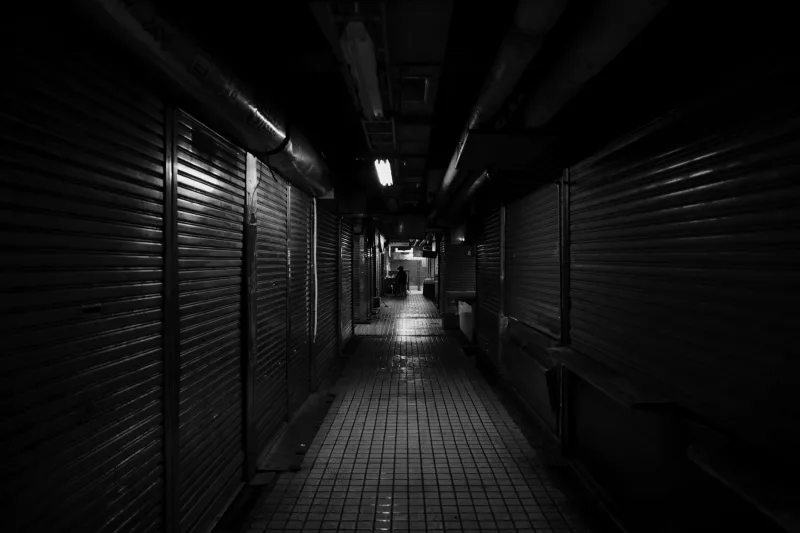
There's a particular kind of thrill that comes with standing in a Shinjuku alley at midnight, staring at a wall that your contact swore was a door. No handle. No buzzer. Just a faint amber glow leaking from somewhere underneath. You knock twice, pause, knock once more — and the wall swings open.
Welcome to Tokyo's ghost club circuit. These aren't just bars with low lighting and a cool aesthetic. These are places that, technically speaking, don't want you to know they exist.
The Art of Not Being Found
Tokyo has always had a layered relationship with nightlife. The city's strict zoning laws, noise ordinances, and post-midnight dancing regulations (which weren't fully relaxed until 2015) pushed a whole generation of venue operators to get creative. What emerged from those years of regulatory pressure was something nobody quite planned for: a culture of deliberate invisibility.
Today, that culture has evolved into something far more intentional. Some spots hide behind unmarked doors tucked inside office buildings. Others operate through rotating membership lists shared only via LINE group chats or word of mouth from people who've already been vetted. A handful require guests to solve an actual puzzle — a QR code hidden in a public artwork, a riddle embedded in a flyer — just to get the address.
"The barrier to entry isn't about exclusivity for exclusivity's sake," explains one longtime Tokyo nightlife regular who asked to remain anonymous. "It's about protecting the vibe. If anyone can walk in off the street, the whole thing falls apart in a week."
The Unwritten Rulebook
For Americans used to Yelp reviews and OpenTable reservations, the etiquette inside these spaces can feel like navigating a foreign country within a foreign country. And honestly? That's part of the appeal.
The first rule is almost universal: you don't photograph anything that could identify the location. Phones stay in pockets, or at least pointed away from the bar's interior. Sharing the address on social media — even vaguely — is considered a serious breach. People have been quietly removed from membership lists for less.
The second rule is about reciprocity. If someone brought you in, you're now responsible for their reputation inside that space. It's a vouching system that mirrors Tokyo's broader social architecture, where relationships carry weight and accountability is personal.
Then there's the drinking itself. Many of these spots run on a "pay what feels right" or fixed-donation model rather than a standard tab. Bartenders — often the venue's founders — pour without asking what you want, reading the room and building something specific for you. It's less like ordering a drink and more like being handed one by someone who's already figured you out.
Who's Actually Going?
The crowd inside Tokyo's ghost clubs is genuinely mixed in a way that mainstream Roppongi or Shibuya venues rarely achieve. On any given night, you might find a freelance graphic designer from Nakameguro sitting next to a visiting DJ from Detroit, a salaryman who stumbled into the scene through a musician friend, and a grad student from NYU doing research on urban subcultures. The common thread isn't demographics — it's curiosity.
For international visitors, especially those who've done the Tokyo tourist circuit before, these spaces offer something the guidebooks can't: a version of the city that feels genuinely unperformed. Tokyo is famously polished in its public face. The ghost club scene is where that polish gets rubbed off on purpose.
"I've been coming to Tokyo for years and I always felt like I was looking at it through glass," says Marcus, a music producer from Chicago who's visited three times in the past two years. "The first time someone brought me to one of these spots, it was the first time I felt like I was actually in Tokyo, not just a tourist moving through it."
The Legal Gray Zone
It would be naive to pretend there's no risk involved — for the operators, at least. Many of these venues exist in genuine regulatory ambiguity. Some operate as private members' clubs, which sidestep certain licensing requirements. Others technically function as art spaces or cultural gatherings, with alcohol treated as incidental. A few are running on sheer goodwill and the hope that nobody official is paying attention.
Tokyo's enforcement environment is generally more relaxed than its rulebook suggests, particularly in areas where nightlife has deep neighborhood roots. But that's not a guarantee, and operators know it. The secrecy isn't just about maintaining mystique — it's also practical self-preservation.
What's interesting is that this legal ambiguity seems to attract a certain type of person rather than deter them. The risk, however minor, adds a layer of realness that sanitized, fully licensed entertainment venues can't replicate.
How to Actually Get In
We're not going to hand you an address — that's the whole point. But there are legitimate ways into this world if you're willing to put in the work.
Start by going deep into Tokyo's legitimate underground music and arts scenes. Attend small gigs at basement venues, show up to gallery openings in Koenji or Shimokitazawa, and actually talk to people. The ghost club network is an extension of a broader community, not a separate entity.
Learn enough Japanese to hold a basic conversation. Not because you'll be turned away for speaking English — plenty of these spaces are multilingual — but because making the effort signals something about your intentions.
And be patient. These aren't places you find on your first trip. They're places you find when Tokyo decides you're ready for them.
That's probably the most Tokyo thing about all of this: the city rewards persistence and genuine engagement in ways that pure tourism never quite reaches. The ghost clubs are just the most dramatic version of that truth.
The wall swings open. You step inside. And whatever happens next, you keep it to yourself.