The City That Never Clocks Out: Inside Tokyo's Nocturnal Worker Underground
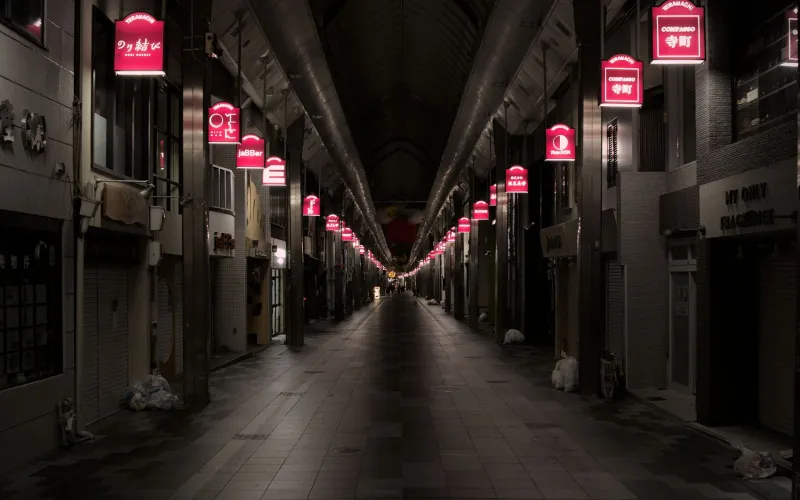
There's a version of Tokyo that most visitors never see. Not the one on the travel blogs with the neon and the sushi and the perfectly timed train connections. This one runs quieter, moves slower, and operates entirely on its own clock. It belongs to the people who punch in when you're calling it a night — and it's more tightly knit than anything happening in the daylight hours.
Tokyo has always had a reputation for working hard. What gets talked about less is how a significant chunk of that workforce operates completely outside the rhythms of normal city life. Convenience store clerks restocking shelves at 3 a.m. Hospital staff cycling through 12-hour overnight rotations. Factory workers running graveyard shifts in the industrial pockets of Ota and Koto. Delivery drivers threading their scooters through streets so empty they almost feel like a different city. These people aren't just working at night — they're living at night. And somewhere along the way, they started finding each other.
A World Built Between Shifts
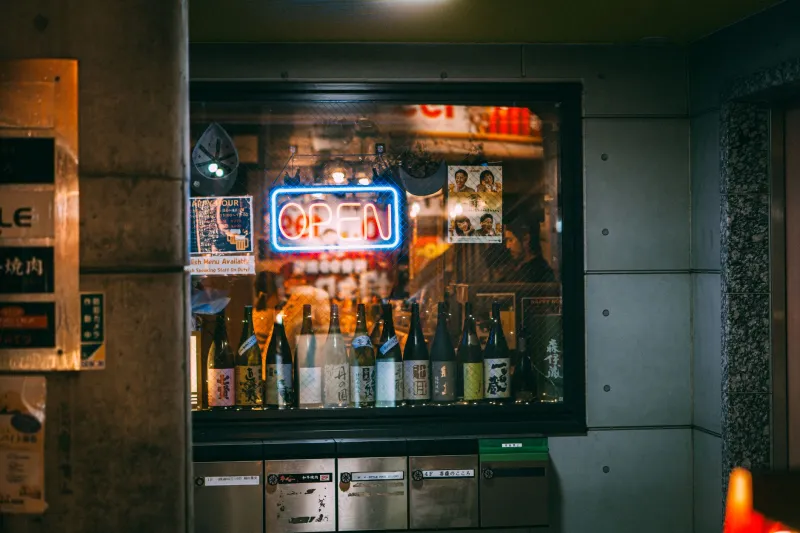
Ask someone who's worked nights in Tokyo long enough and they'll tell you about the handshake economy that develops between regulars. The ramen shop in Shinjuku that keeps a back table unofficially reserved for hospital workers finishing the overnight. The 24-hour family restaurant near a distribution hub in Edogawa where drivers know the staff by name, and the staff knows exactly how everyone takes their coffee. These aren't formal arrangements — nothing is written down, nothing is advertised. It's just the accumulated weight of showing up at the same odd hours, night after night, until something like community forms around it.
In a city where social life is heavily structured around work hierarchies and neighborhood ties, the nocturnal workforce operates outside most of those traditional frameworks. A hospital orderly, a factory line worker, and a freelance delivery driver don't have a lot of obvious common ground. But share enough 4 a.m. meals in the same fluorescent-lit diner and something shifts. You stop being strangers who happen to be awake at the wrong time. You become regulars. You become, in a low-key way, each other's people.
The Spots Only Night People Know
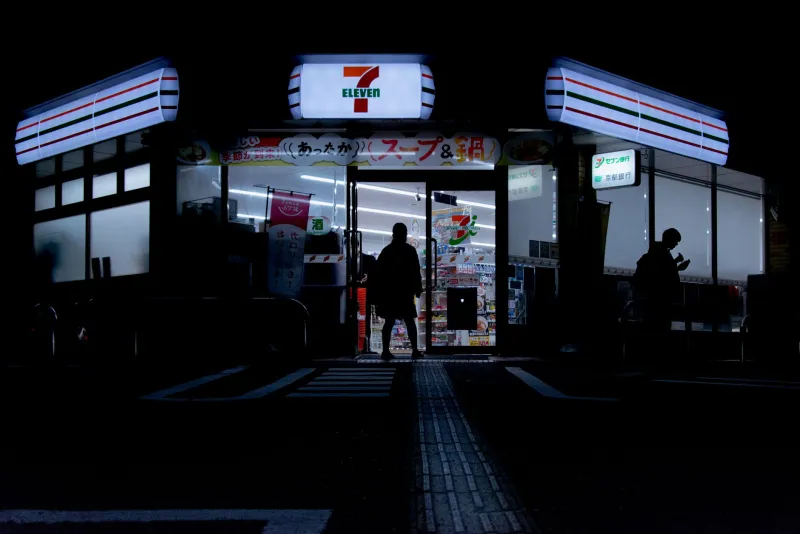
The geography of night-shift Tokyo is surprisingly specific. Certain konbinis become de facto social hubs — not because they're particularly special, but because they're warm, they're open, and nobody's going to rush you out. A Seven-Eleven near a major hospital in Bunkyo, for instance, quietly serves as a decompression zone for overnight medical staff who need somewhere to decompress between shifts without committing to a full meal. The staff knows the regulars. The regulars know the staff. Everybody leaves each other alone in exactly the right way.
Then there are the sento — public bathhouses — that specifically cater to the post-shift crowd. Some open as early as 5 a.m., and they fill up with a cross-section of people you'd never see sharing a space during the day: construction workers, factory employees, the occasional club promoter winding down from a long night of something entirely different. The bathhouse becomes a kind of equalizer. Nobody's a manager or a subordinate in there. You're just tired, and the water's hot.
For food, the go-to spots tend to be places with no pretension and no closing time — teishoku joints where the lunch set technically transitions into a breakfast set without anyone changing the sign, or standing-only soba counters that feel specifically designed for people who need to eat fast and get moving. There's a particular kind of freedom in eating at 6 a.m. when the rest of the city is just waking up. You're already done. You've already put in the work.
Identity, Not Just a Schedule
What's interesting about Tokyo's nocturnal workforce is that for a lot of people in it, the hours stop being a burden and start becoming a point of pride. There's a quiet tribalism to it. Night workers develop a shared vocabulary — shorthand for the way time moves differently after midnight, the specific loneliness of a Sunday 2 a.m., the strange intimacy of a city that's been stripped down to its skeleton.
Social media plays a role here, though it's subtle. There are loose networks of night-shift workers who connect through private group chats and low-key Twitter communities, sharing recommendations for the best spots to eat after a shift, swapping notes on which vending machines are stocked with what, occasionally organizing informal meetups that look, to anyone stumbling across them, like just a group of friends getting breakfast at an unreasonable hour. Which is, in a way, exactly what they are.
For younger workers especially — the part-timers and gig workers who've built their entire schedules around nocturnal hours — the night shift has become something closer to a lifestyle than a job description. The city is cheaper at night in certain ways. The pressure is lower. The social expectations that govern daytime Tokyo — the formality, the hierarchy, the constant performance of busyness — don't apply in quite the same way when it's 4 a.m. and you're the only ones awake.
What the Night Teaches You
Spend enough time in this world and you start to understand something about Tokyo that the daytime version doesn't show you. The city's famous efficiency, its cleanliness, its sense of everything being exactly where it's supposed to be — that doesn't happen on its own. It gets built, every night, by people most residents will never think to thank.
But here's the thing: most of them aren't looking for thanks. They've got something better. They've got a version of the city that belongs almost entirely to them — quieter, stranger, and in some ways more honest than anything you'll find when the sun's up. The neon still glows. The trains still run. And somewhere between the last shift and the first light, a whole other Tokyo is sitting down for breakfast, comparing notes, and getting ready to do it all again.
If you're visiting and you want a glimpse of it, the door's technically open. Just set your alarm for 3 a.m. and be willing to sit quietly in a ramen shop without asking too many questions. They'll know you're not one of them. But they might let you watch.