Borrowed Walls: The Artists Turning Tokyo's Empty Storefronts Into Something the City Didn't Plan For
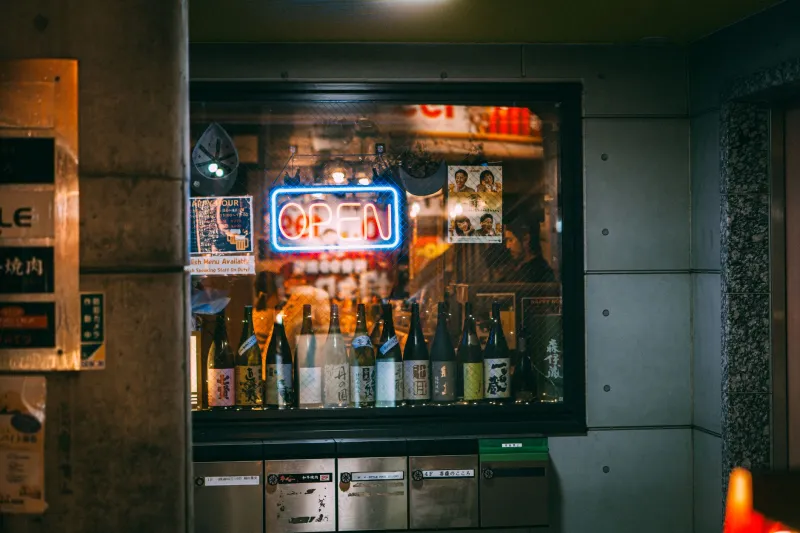
The sign on the door says the lease ended in March. The phone number on the faded vinyl lettering goes to voicemail. But on a Thursday night in Koenji, there are twenty people crammed into what used to be a dry cleaner, watching a performance artist cover themselves in rice paper while a laptop produces something between ambient music and static.
Nobody asked permission for this. Nobody's quite sure if they needed to.
The Vacancy Problem No One Talks About
For all its reputation as a city of relentless density and economic intensity, Tokyo has a ghost problem. Thousands of commercial properties sit vacant across the 23 wards — a product of economic stagnation, aging landlords reluctant to renovate, labyrinthine inheritance laws, and a broader demographic contraction that's quietly hollowing out neighborhood commercial strips.
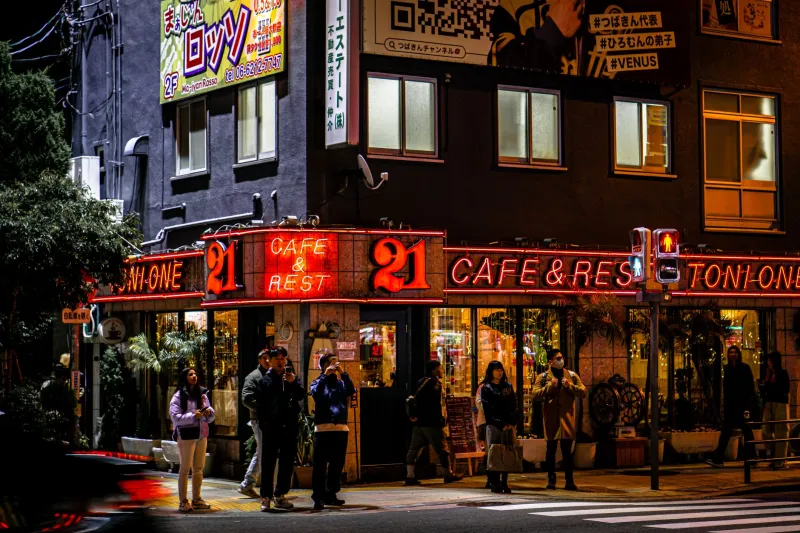
In some areas, particularly in older shitamachi neighborhoods like Koenji, Shimokitazawa, and parts of Sumida and Arakawa, the vacancy rates on ground-floor commercial space have crept high enough to be genuinely noticeable. Walk down the right shotengai — one of those covered shopping arcades that once anchored neighborhood life — and you'll pass shuttered stall after shuttered stall, their interiors dim and accumulating dust behind sliding metal shutters.
For most people, this is background noise. For a certain kind of creative person in Tokyo, it looks like opportunity.
The Logic of the Temporary Takeover
Yoshiko has been organizing what she loosely describes as "space activations" for about three years. She's careful with language — not squatting, she insists, though she acknowledges the line can get blurry. The spaces she works with are vacant, usually for extended periods, and the arrangement with property owners ranges from explicit verbal permission to a kind of deliberate non-acknowledgment.
"Some owners genuinely don't care," she explains, sitting in a coffee shop in Koenji. "The space is costing them money to maintain. If someone is using it, keeping it clean, not causing problems — some of them would rather not know the details."
This is the legal gray zone that makes Tokyo's version of this phenomenon distinct from, say, squatter movements in cities like Berlin or New York. There's rarely a confrontational occupation. It's more of a quiet, temporary inhabitation — a handshake deal with ambiguity. The organizers move in, do their thing for a few weeks or months, and disappear before anyone has to make it official.
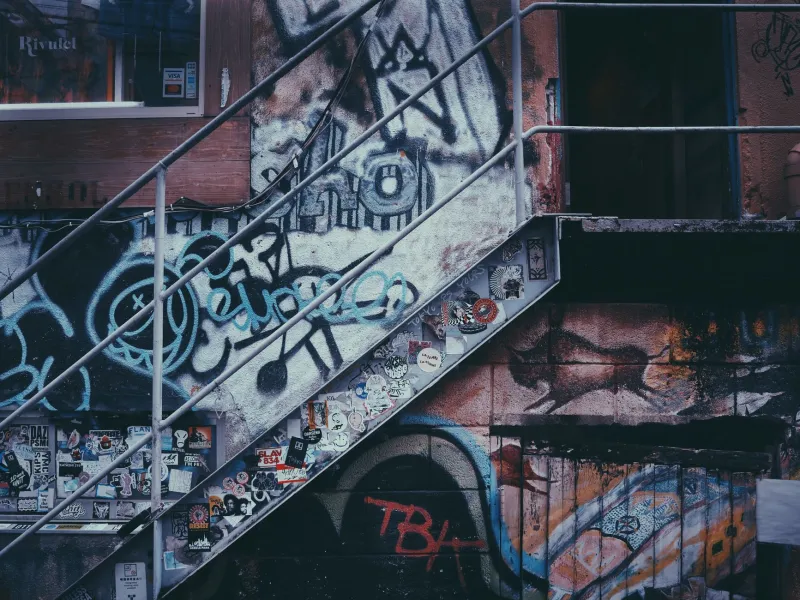
The events that happen inside these spaces are equally varied. Gallery shows with no admission price. Zine fairs that draw fifty people and pack up in an afternoon. Political organizing meetings for activist groups that prefer not to meet in traceable commercial venues. Small concerts where the "stage" is a cleared corner and the PA system fits in a backpack.
What Gets Made in the Margins
There's a specific quality to work that gets made under these conditions, and the artists who operate this way talk about it with something close to reverence.
Ryu is a painter who has shown work in three different temporary spaces over the past two years — a former photo studio in Nakameguro, a shuttered convenience store annex in Nerima, and most recently a space that had been a small insurance office somewhere in Itabashi. He's not represented by a gallery. He's not trying to be.
"A gallery has expectations," he says. "The work has to fit the walls, fit the lighting, fit the story the gallery is already telling. In a dead insurance office, the only story is the one you bring."
That freedom shows up in the work. Because there's no commercial pressure — no sales to close, no collector relationships to manage — the art that gets made and shown in these spaces tends toward the experimental, the unfinished, the deliberately difficult. It's the kind of work that gets filtered out of the official creative economy before most people ever see it.
For American visitors familiar with the DIY art scenes that have historically flourished in cities like Portland, Philadelphia, or the outer boroughs of New York, the comparison is obvious. But Tokyo's version has a particular intensity to it, shaped by the city's extreme real estate pressures and the cultural weight of propriety that makes even mild transgression feel meaningful.
The Owners Who Look the Other Way
Not every property owner is passively tolerant. Some are actively, if quietly, supportive.
Takahashi-san, a retired businessman in his late sixties who owns several small commercial properties in Koenji that he inherited from his father, describes his arrangement with the groups that have used his vacant ground-floor space as "understanding."
"I know something is happening there sometimes," he says, through a translator. "I walk by and I see the lights on. I don't go in. If they break something, I expect them to fix it. They haven't broken anything."
His reasoning is partly pragmatic — a space that's being used and monitored, even informally, is less likely to accumulate problems than one that's truly abandoned. But there's something else in it too, a kind of generational sympathy for young people doing creative work in a city that has made it economically brutal to do so.
"My father's generation built this neighborhood," he says. "I think he would have wanted it to stay alive somehow."
Resistance With an Expiration Date
The impermanence is baked in, and everyone involved seems to understand that. The spaces get reclaimed — by new tenants, by renovations, by owners who finally decide to sell. The events end. The work comes down. People scatter to the next available corner.
Some organizers find this freeing. Yoshiko describes the temporariness as part of the politics of it — a refusal to build the kind of institution that can be co-opted or captured. "If we had a permanent space, we'd have to protect it," she says. "We'd have to compromise to keep it. This way, we stay honest."
Others are more ambivalent. Ryu talks about the exhaustion of constantly starting over, of never being able to build on what came before in any concrete way. "Sometimes I want a wall that's mine for more than six weeks," he says, and laughs, but not entirely like it's a joke.
Why This Matters Right Now
What's happening in Tokyo's empty storefronts isn't just an art story. It's a generational story, and an urban story, about what happens when a city's official creative infrastructure fails to keep pace with the people who actually want to make things.
Tokyo is one of the most expensive cities on earth. Rents for legitimate commercial space — even in less fashionable neighborhoods — are prohibitive for young artists working without institutional support. The galleries and venues that do exist operate within an economic logic that naturally filters toward the commercially viable and the aesthetically safe.
The ghost shops are filling a gap that shouldn't exist. And the people using them are building something real inside it, even if real and temporary turn out to mean the same thing.
Somewhere in Koenji right now, the lights are on in a space that's technically empty. The rice paper performance is probably over. But something else is probably starting.