Cash in Hand, Off the Map: How Tokyo's Underground Creators Built Their Own Economy
Somewhere in Shimokitazawa, a painter hands a rolled canvas to a stranger in a convenience store parking lot. No receipt. No invoice. No record that the transaction ever happened. The buyer passes an envelope. They nod. They go their separate ways.
This isn't a drug deal. It's just Tuesday for a chunk of Tokyo's independent creative community.
While the rest of the world debates crypto regulation and digital payment security, Tokyo's underground scene has quietly built a parallel financial system that runs almost entirely outside official channels. It's not glamorous. It's not particularly organized. But it works — and for a lot of creators, it's the only thing standing between them and giving up entirely.
Why the Mainstream Money System Doesn't Work for Everyone
To understand why so many artists, musicians, and designers here operate off the books, you have to understand what the alternative looks like. Japan's formal economy is notoriously paperwork-heavy. Registering as a sole proprietor, filing taxes as a freelancer, maintaining proper invoicing records — it's a process that takes time, money, and a level of bureaucratic fluency that younger or newer creators often simply don't have.
Add to that the reality that many underground venues, pop-up galleries, and DIY music spaces operate in legal gray areas themselves — unlicensed, subleased, or technically zoned for something entirely different — and suddenly the idea of running everything through a traceable bank account becomes a liability rather than a convenience.
"If I put everything through my bank, I'd have to explain where it's coming from," says one visual artist who sells work out of a rotating collective space in Koenji. She asked us not to use her name, which honestly felt pretty on-brand. "And then I'd have to explain the space. And then I'd have to explain the people who run the space. It gets complicated fast."
The Envelope Economy
Cash is still king in Japan in a way that surprises most American visitors. While the US has been aggressively pushing cashless payments for years, Japan's attachment to physical yen runs deep — and the underground scene has leaned all the way into it.
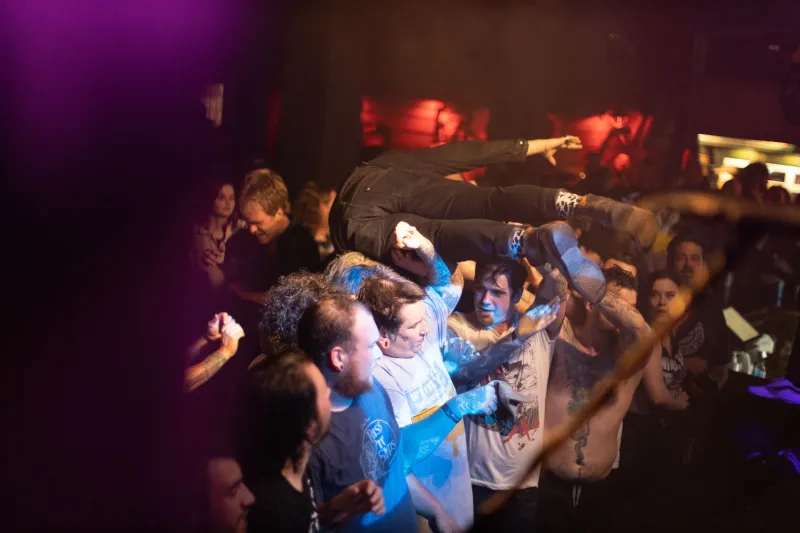
At gallery openings in converted warehouse spaces, payment for artwork happens in envelopes. At basement music events, door fees get collected in a box or a bag, counted by hand, and split among performers at the end of the night. Clothing designers selling one-of-a-kind pieces at street markets take cash only, sometimes without even posting prices until someone asks.
This isn't just about avoiding taxes — though that's obviously part of it. It's also about speed, flexibility, and keeping money inside the community. When a venue collects door money in cash, that same cash might pay the sound engineer, who uses part of it to buy gear from another community member, who uses that to cover their share of a studio space. The money circulates in a tight loop that rarely touches a bank.
"It's almost like a local currency," says one promoter who runs irregular events across multiple neighborhoods. "The same five hundred yen coin might go through ten hands in a month, all within like a two-kilometer radius."
Younger Creators and the Crypto Experiment
Not everyone is operating purely in cash, though. Among younger creators — particularly those with international connections or a customer base that extends beyond Tokyo — there's been a quiet but real experiment with cryptocurrency.
It's not the moonboy stuff you'd associate with finance bros in Roppongi. It's more practical than that. A few designers selling limited streetwear drops have started accepting payment in stablecoins via wallet addresses shared only in private group chats. Some musicians releasing music independently have set up crypto tip jars linked from their social profiles — but the actual wallet addresses get swapped out regularly to avoid pattern recognition.
The appeal is obvious: borderless, relatively anonymous, no platform taking a cut. The downside is equally obvious: volatility, technical friction, and the reality that most buyers still aren't comfortable with it.
"I tried it for about three months," says one DJ who produces and sells original tracks alongside her live sets. "Maybe ten percent of my sales came through that way. It's not nothing, but it's not the future yet either. For now it's more of a side door."
Trust as Currency
What makes any of this work — cash envelopes, crypto wallets, handshake deals — is something that doesn't show up on any balance sheet: trust.
Tokyo's underground scene is small enough that reputation travels fast. Someone who cheats a collaborator, skips out on a split, or misrepresents what they're selling gets known for it quickly. The informal financial system only functions because the social system policing it is tight.
This is actually one of the more interesting things about the whole setup. In the absence of contracts, escrow, or dispute resolution services, the community itself becomes the enforcement mechanism. You don't rip people off because you'll never work in this city again if you do — and in a scene this interconnected, that consequence is real.
"I've seen people get completely frozen out for less," says one event organizer who has been running underground shows for nearly a decade. "Like, not even for stealing a lot. Just for being slippery about money once. Word gets around."
What It Costs, What It Buys
There are real costs to operating this way. Creators who work entirely off the books can't build credit histories, access business loans, or apply for most grants and arts funding programs. They're invisible to the formal systems that might otherwise support them — which means when things go wrong, there's no safety net.
Some creators are starting to think about this more seriously as they get older or try to scale what they're doing. A few have started working with informal accountants — people within the community who understand both the official tax system and how to navigate it without exposing the parts of your operation you'd rather keep quiet.
It's a messy compromise, but then again, the whole thing is built on messy compromises. That's kind of the point.
What the ghost economy reveals, more than anything, is how much creative energy exists outside the structures that are supposed to support it. These are people making real things, building real communities, and sustaining real livelihoods — just without the paperwork that would make any of it legible to the outside world.
Maybe that's fine. Maybe legibility was never the goal.
The envelope gets passed. The canvas goes home with someone who wanted it. And somewhere in Shimokitazawa, the economy keeps moving.