Tokyo's DIY Venues Are Getting Priced Out — Here's How They're Refusing to Go Quietly
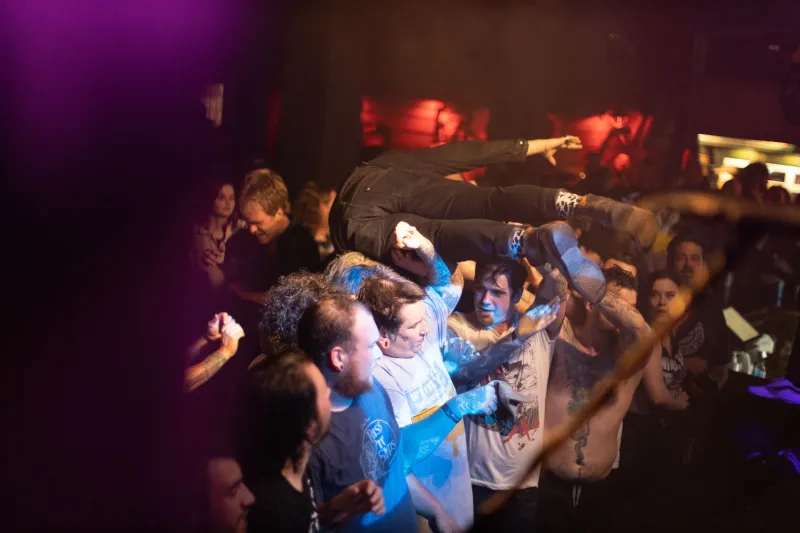
Let's get one thing straight: Tokyo was never cheap. But there's a particular cruelty to what's happening right now in neighborhoods like Shimokitazawa, Koenji, and pockets of Kita-Senju — places that built their entire identities around scrappy, low-overhead creative culture. Rents are climbing. Landlords who once looked the other way at a basement full of noise equipment and mismatched furniture are suddenly very interested in redevelopment. And the venues that have been quietly holding the city's underground together for decades are running out of runway.
This isn't just a Tokyo problem. Anyone who watched what happened to Brooklyn's DIY scene after the mid-2010s gentrification wave, or followed the slow death of warehouse spaces in LA after stricter code enforcement hit post-Ghost Ship, knows exactly how this story can end. But what's different here — and what's worth paying attention to — is how Tokyo's organizers are fighting back. They're not just complaining on social media. They're building actual infrastructure.
The Numbers Are Brutal, But the Culture Isn't Dead Yet
Talk to anyone running a small venue in central Tokyo right now and you'll hear variations of the same story. A basement space in Nakameguro that rented for roughly ¥80,000 a month five years ago is now fielding quotes closer to ¥150,000. That's a jump from under $600 to over $1,000 — and for a 60-person capacity room that charges ¥1,500 at the door and splits that with three bands, the math stops working fast.
Kenji, who runs a multi-use space in Koenji that hosts everything from noise shows to zine swaps to occasional film screenings, put it plainly when we sat down with him last month. "The landlord isn't evil. He has costs too. But we built something real here, and the city doesn't have a mechanism for protecting that. There's no cultural preservation for a venue that's never been famous."
He's right. Japan's cultural preservation frameworks tend to protect the historically significant and the visibly traditional. A basement that smells like old cables and has hosted three hundred underground shows doesn't qualify for anything. It just disappears.
The Co-Op Model: Spreading the Risk, Sharing the Rent
One of the more interesting structural responses to this pressure is the emergence of artist co-ops that pool resources to hold onto physical space. Think of it less like a record label and more like a housing co-op — a group of organizers, musicians, visual artists, and event producers collectively signing a lease and splitting the monthly nut.
A collective in Kita-Senju has been operating this way for about two years. Twelve contributors, ranging from a DJ who plays bi-weekly residencies to a ceramicist who runs weekend workshops, each put in a fixed monthly amount. The space stays booked, the rent gets paid, and no single person is on the hook when a show undersells. "It means we can say yes to weird things," one of the collective's founding members told us. "A show that only sells forty tickets doesn't terrify us the way it would if one person was holding the lease."
This model has precedents in the US — DIY spaces in cities like Chicago and Richmond, Virginia have operated on similar collective ownership principles — but in Tokyo it's being refined with a level of organizational precision that feels distinctly local. Spreadsheets, rotating responsibilities, formal agreements about booking priority. It's underground culture with a slightly more serious back office.
Sliding Scale, Subscription, and the New Economics of the Door
Beyond structural co-ops, individual venues are experimenting with funding models that look less like traditional nightlife and more like community-supported agriculture. Pay-what-you-can door policies, once rare in Tokyo's underground (where a flat ¥2,000 cover was basically the industry standard), are showing up more frequently — particularly at events where the organizers care more about filling the room than maximizing revenue on any given night.
More interestingly, a handful of spaces have launched informal subscription programs. For a monthly contribution — typically somewhere between ¥3,000 and ¥5,000 — supporters get early access to event announcements, occasional free entry, and the knowledge that they're directly subsidizing a space they care about. It's the Patreon model applied to physical venues, and it's working better than you might expect in a city not exactly known for its culture of public financial support for the arts.
"Americans do this with public radio," one organizer pointed out to us, not incorrectly. "They pay to keep something alive because they want it to exist. We're just asking people to do that for a room they dance in."
International Solidarity and the Cross-Pacific Connection
Perhaps the most unexpected development in Tokyo's underground survival strategy is the growing network of international solidarity — particularly with DIY organizers in the US and Europe who are navigating similar pressures.
Several Tokyo collectives have formalized exchange relationships with spaces in cities like Portland, Berlin, and Philadelphia. Artists travel between venues, shows get co-presented across time zones (live-streamed performances are a growing piece of this), and crucially, funding strategies get shared openly. A grant application framework that worked for a DIY space in Baltimore gets translated, adapted, and tested in Shimokitazawa. A Tokyo collective's approach to landlord negotiation gets written up and shared in a zine distributed at a show in Detroit.
This kind of lateral knowledge transfer — underground venues teaching each other how to survive — doesn't make headlines. But it might be one of the more genuinely useful things happening in independent music culture right now.
What the US Underground Can Take From This
If you're involved in running a DIY space anywhere in America, Tokyo's current moment is worth studying carefully. Not because the contexts are identical — they're not — but because the organizers here are being forced to solve problems that US scenes will face (or are already facing) with a level of creative rigor that's genuinely instructive.
The co-op lease model is replicable. The subscription-based community funding approach is replicable. The international knowledge networks are replicable, and honestly, they're already partially built — you just need someone to plug into them.
What's harder to export is the particular stubbornness that seems to animate Tokyo's underground right now. A refusal to treat the death of a venue as inevitable. A willingness to do the boring organizational work — the spreadsheets, the collective agreements, the slow fundraising — in service of something that exists primarily to be loud and strange and alive.
Kenji, back in Koenji, summed it up the way only someone who's been doing this for fifteen years can. "Every year someone tells me we won't survive the next year. We're still here. The city keeps changing. We keep changing with it. That's not a victory. It's just what you do."
That might be the most useful thing Tokyo's underground has to teach anyone right now. Not a strategy. A posture. Keep going. Figure out the money. Don't let the room go dark.