Who Decides What's Cool in Tokyo? Meet the People Pulling the Strings Underground
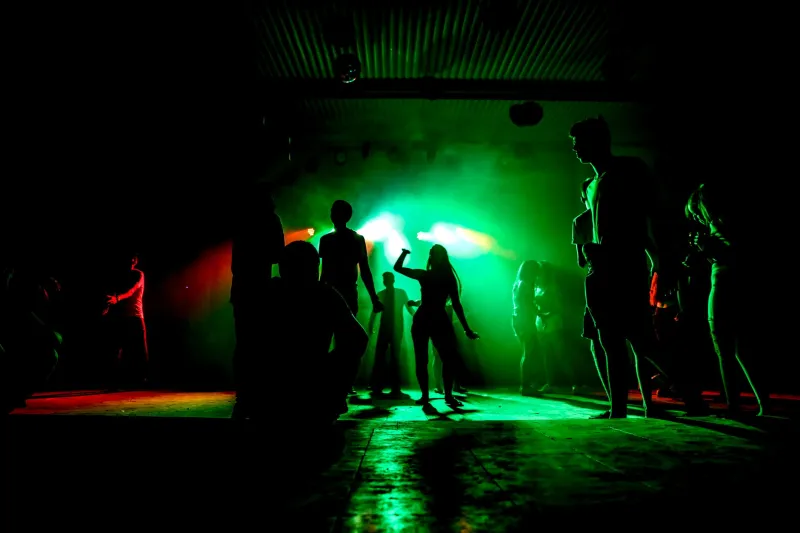
There's a party happening somewhere in Tokyo tonight. You don't know where it is. You don't know how to find out. And if you have to ask, you probably weren't going to get in anyway.
That's not an accident.
Tokyo's underground scene — the raves tucked into unmarked warehouses in Koenji, the jazz listening bars accessible only through a friend's friend, the art pop-ups that exist for exactly one night before disappearing — doesn't sustain itself through algorithms or influencer posts. It sustains itself through people. Specific people. People who have spent years building trust, taste, and a very particular kind of social capital that doesn't show up on a follower count.
These are the gatekeepers. And understanding how they operate tells you everything about how Tokyo's counterculture actually works.
The Invisible Promoter Class
In cities like New York or LA, the promoter is a known entity. They've got a website, a booking email, maybe a publicist. In Tokyo, the equivalent figure is almost always deliberately obscure. They go by monikers, they communicate through closed LINE groups, and their events — if they're doing it right — never get posted publicly until they're already sold out.
Take the cluster of promoters working out of Shimokitazawa and the surrounding neighborhoods. This is ground zero for Tokyo's indie and experimental music scenes, and the people booking shows there aren't thinking about reach. They're thinking about room temperature. Literally — who should be in the room, and why.
"If someone asks me how to get on the list, that's already a red flag," one promoter told us, speaking on the condition we not use their name or the name of their collective. "The people I want at my events already know. They've been around. They've contributed. The scene takes care of its own."
That sounds elitist. Sometimes it is. But there's a logic to it that goes beyond snobbery.
Curation as Community Building
The argument these tastemakers make — and it's not an unreasonable one — is that tight curation is what keeps a scene alive. When a Tokyo underground event stays underground, it doesn't get flooded with tourists looking for content, brands looking for authenticity to co-opt, or real estate developers looking for neighborhoods to gentrify. The gate, in other words, is also a shield.
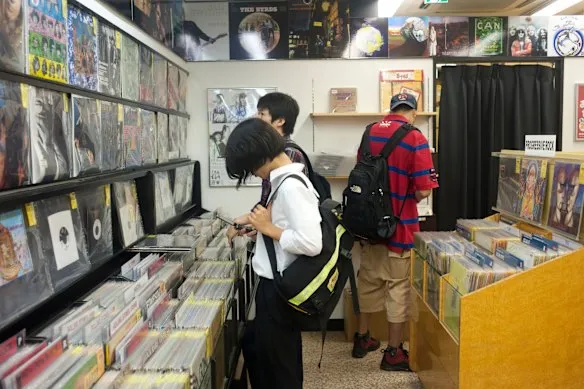
This philosophy shows up most clearly in Tokyo's record store ecosystem. There are shops in Nakameguro and Kagurazaka that carry no signage visible from the street, maintain no social media presence, and stock their shelves based entirely on the owner's taste — which is to say, they stock what they want you to hear, not what you came in looking for. Regulars describe these shops less as retail spaces and more as curated listening experiences, where the owner functions as a kind of sonic guide.
One shop owner in Koenji — a woman who's been running her space for over a decade — put it plainly: "I'm not trying to sell records. I'm trying to share something. If you come in here and you're open, you'll leave with something that changes you. If you come in here with a list, you're at the wrong place."
That philosophy of openness-as-prerequisite runs through a lot of Tokyo's underground. The gatekeeping isn't always about exclusion. Sometimes it's about creating the conditions for genuine discovery.
The Dark Side of the Velvet Rope
But let's not romanticize this too hard. Gatekeeping in Tokyo's underground, like everywhere else, has a shadow side.
Foreign residents — particularly Black and brown expats — have documented consistent experiences of being turned away from events or venues with no explanation, or of being made to feel unwelcome in spaces that brand themselves as open and alternative. The underground's insularity, which protects it from commercialization, can also calcify into something uglier: a closed loop of the same demographics, the same aesthetics, the same faces.
Some of the more self-aware figures in the scene acknowledge this openly. "There's a version of 'keeping it underground' that's actually just keeping it homogeneous," said one DJ and event organizer who works primarily in the queer and POC-friendly club spaces of Shinjuku and Harajuku. "And that's not counterculture. That's just a smaller version of the mainstream with better playlists."
This tension — between curation and exclusion, between community protection and gatekeeping as control — is one of the defining fault lines in Tokyo's underground right now. The scenes that are thriving tend to be the ones where tastemakers have figured out how to hold both truths at once: yes, you need to curate, and yes, that curation has to be genuinely open to people who don't look like you.
The New Wave of Gatekeepers
What's interesting is that a new generation of curators is actively trying to rewrite the rules of access without blowing up the intimacy that makes these scenes worth protecting in the first place.
Some are doing it through rotating invite systems — where regulars can bring one new person each month, creating a slow, organic expansion of the community. Others are building multi-lingual event communications to reach non-Japanese speakers without broadcasting to the entire internet. A few collectives in Ebisu and Daikanyama have started hosting open orientation nights — not open to the public exactly, but open to anyone who shows up with genuine curiosity rather than a camera.
The common thread is intentionality. These aren't scenes that happened by accident and are trying to preserve themselves. They're scenes that are being actively designed by people who've thought hard about what kind of space they want to create and who they want inside it.
What This Means If You're Trying to Find It
For visitors or newer Tokyo residents trying to break into any of this — the honest answer is that there's no shortcut. The people who find their way into Tokyo's real underground almost universally describe the same path: show up consistently, contribute something (whether that's skills, time, or just genuine enthusiasm), and let the scene come to you.
The gatekeepers aren't looking for your credentials. They're looking for evidence that you actually care. That you're not just mining the scene for content or clout, but that you're there because this music, this art, this community means something to you.
That bar might sound high. In a city where the underground is constantly under threat from rising rents, tourism pressure, and the flattening force of social media virality, it's actually the lowest possible bar they can set and still keep the thing alive.
So yeah — there are people deciding what gets discovered in Tokyo. And honestly? Given what's at stake, it's hard to say they're wrong.