Retail Ruins and Rebels: Inside the Crumbling Malls Where Tokyo's Underground Does Business
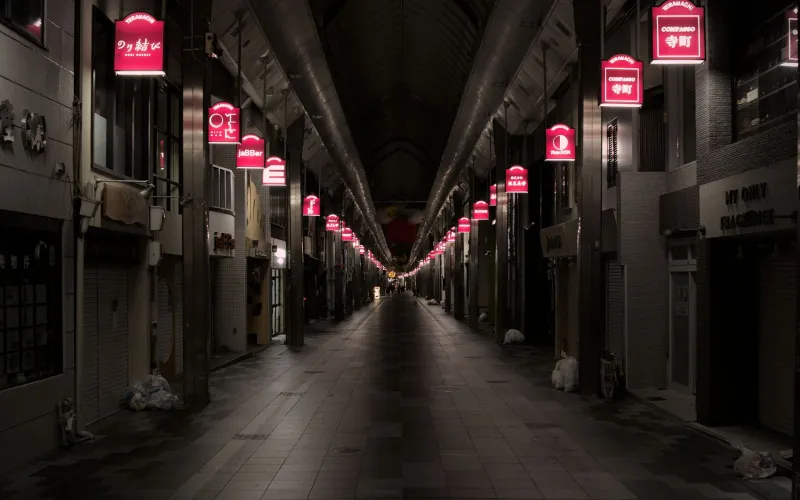
There's a particular kind of silence that settles into a dead mall. Not the peaceful kind — more like the held-breath quiet of a place that used to be loud and doesn't quite know what it is anymore. Tokyo has a lot of buildings like that right now. Shuttered department store annexes in Tama. Collapsed commercial strips in outer Adachi. Half-empty fashion buildings in neighborhoods that peaked sometime around 2004 and never really recovered.
Most people walk past them without thinking twice. But if you know who to ask — and if you're willing to show up on the right day, at the right hour — those buildings are anything but empty.
The Collapse Nobody Talked About
Tokyo's retail crisis didn't happen overnight, but it accelerated fast. A combination of e-commerce gutting foot traffic, an aging population pulling back from consumer culture, and pandemic-era lease collapses left huge commercial gaps across the city — especially in neighborhoods that weren't already propped up by tourism or luxury development.
For landlords, these spaces became headaches. Heating costs, maintenance obligations, zoning complications — letting a building sit vacant is expensive, but filling it with traditional tenants in a down market is its own nightmare. The result: a lot of looking the other way. A lot of informal arrangements. A lot of doors that are technically locked but, you know, not really.
That ambiguity is exactly where Tokyo's underground communities thrive.
The Collectors Who Moved In First
It usually starts with someone who needs space and can't afford to pay market rate for it. In Tokyo's dead malls, the first wave of unofficial tenants tends to be collectors — the obsessive, encyclopedic kind who've been dealing in rare goods out of their apartments for years and finally have room to breathe.
Think vintage sneakers in deadstock condition, still in their original regional packaging. Imported vinyl from labels that barely existed. Early-2000s streetwear that never made it to the US market. Manga editions that went out of print before most of their current buyers were born. These aren't people running Instagram shops with clean aesthetics and next-day shipping. They're operating in a different register entirely — word of mouth, LINE group chats, the occasional handwritten flyer slipped into the right hands.
One collector operating out of a former electronics store in western Tokyo — he asked to be identified only by his collecting specialty, vintage game peripherals — described his setup as "a museum that sometimes sells things." His inventory takes up what used to be three separate retail units. He pays, as he put it, "something" to someone he'd rather not name. He's been there for two years.
"Nobody bothers us," he said. "We don't cause problems. We just exist."
Fashion That Doesn't Ask Permission
The second wave, at least in the dead malls that are a little more centrally located, tends to be designers. Not the kind with showrooms in Minami-Aoyama or stockists in New York. The kind who are making things in small runs, selling direct, operating without the licensing and registration that official retail requires.
This is experimental fashion in the truest sense — not experimental as a marketing word, but experimental as in: nobody's sure if it'll work, there's no safety net, and the whole operation could fold or move next month if circumstances change. Garments are often made on-site, in the back of whatever space has been claimed. Fittings happen by appointment. Some designers post lookbooks online; others don't bother, relying entirely on the network of people who already know them.
What's interesting is that the aesthetic often reflects the environment. Distressed fabrics, deconstructed silhouettes, pieces that look like they were made in a place that's falling apart — because they were. There's no irony in it. It's just honest.
An Economy Without a Name
What's happening in Tokyo's dead malls is, in economic terms, a gray market. Transactions happen in cash. Spaces are occupied through informal arrangements that wouldn't survive legal scrutiny. Nobody's filing sales tax. Nobody's particularly worried about it.
For the people operating inside this system, that's not a bug — it's the whole point. Official retail in Tokyo, like official retail everywhere, comes with layers of overhead that make it nearly impossible to run a small, weird, niche operation at sustainable margins. Rent, licensing, insurance, employee registration — the costs stack up fast and they favor scale. The underground economy in these dead malls runs on the opposite logic: low overhead, low visibility, low risk of anyone caring enough to shut you down.
It's not unlike what happened with certain flea markets in the US during the 80s and 90s, when shuttered shopping centers in the Rust Belt became informal bazaars for vendors who couldn't afford conventional retail space. Tokyo's version just has better sneakers.
The Real Estate Angle
Here's the uncomfortable truth that nobody operating in these spaces wants to dwell on too long: the window might be closing. Tokyo's real estate market, even in its softer pockets, doesn't stay soft forever. Developers are patient. Zoning decisions get made. Buildings that seemed permanently stranded get flagged for redevelopment.
Some of the communities that have taken root in dead malls are already thinking about this. There's informal talk about collective models — groups of vendors pooling resources to negotiate actual leases if and when a landlord decides to formalize things. Whether that would preserve what makes these spaces interesting, or slowly sand off the edges until they're just slightly cheaper versions of normal retail, is an open question.
For now, though, the ruins hold. The collectors keep showing up. The designers keep making things in the back rooms of stores that used to sell cell phone accessories or fast fashion or nothing memorable at all.
Why It Matters
If you're visiting Tokyo from the US and you're used to thinking of the city as a place of frictionless commercial efficiency — vending machines everywhere, convenience stores open at 3 AM, the whole perfectly-organized-consumer-paradise thing — the dead mall underground is a useful corrective. Tokyo has friction. Tokyo has gaps. And in those gaps, people are doing genuinely interesting things that don't show up on any tourism site or Instagram algorithm.
Finding it requires some effort. It requires knowing someone, or being the kind of person who notices a propped-open door in a building that looks closed and decides to walk through it anyway.
But that's kind of always been the price of admission for anything worth finding in this city.