Name Your Price, Keep the Record: How Tokyo's DIY Music Collectives Are Rewriting the Rules
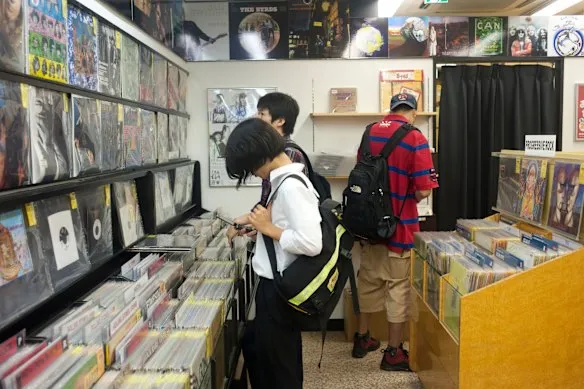
Photo: vinyl record swap meet underground music collective Tokyo Shimokitazawa, via static.ffx.io
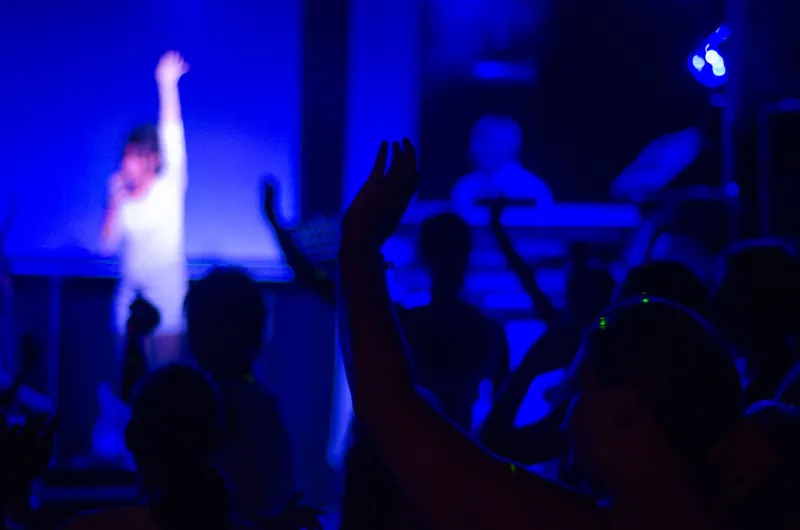
On a Saturday afternoon in Shimokitazawa, a neighborhood that's basically Tokyo's answer to Brooklyn circa 2009, about forty people are crowded into a space roughly the size of a one-car garage. Crates of vinyl line the walls. Someone's running a hand-crank coffee setup in the corner. There's no cover charge posted at the door — instead, a small handwritten sign reads: Pay what feels right. Nothing is also fine.
This is Ondo Collective's monthly swap meet, and it's been running for almost three years without a single sponsored post, branded tote bag, or industry partner. Just records, people, and a genuinely radical idea about how music communities should work.
The Problem They're Solving
To understand why Tokyo's DIY music scene has gotten so creative about economics, you have to understand what it's reacting against. Japan's mainstream music industry is notoriously rigid — a system of major labels, strict venue hierarchies, and a ticket market that's been slow to adapt to anything outside traditional sales channels. Getting a show at a mid-size venue in Tokyo can mean navigating a web of promoter relationships and guarantees that effectively price out independent artists before they've played a single note.
The collectives working around that system aren't just doing it for the aesthetic. They're doing it because the alternative — waiting for the industry to make room — hasn't historically worked out.
"We got tired of asking permission," says Rie, one of Ondo's three co-organizers, speaking through a translator at the swap meet. "So we stopped."
Sliding Scale and Why It Actually Works
Sliding scale admission — the model where attendees pay what they can, within a suggested range or with no floor at all — sounds like it should collapse immediately. In practice, across Tokyo's underground collectives, it's proven surprisingly stable.
The math works partly because of community trust and partly because of intentional curation. These aren't events anyone can stumble into off the street. They're built on mailing lists, word of mouth, and the kind of social accountability that comes with being a recognizable face in a small scene. People who can pay more often do, because they understand they're subsidizing access for people who can't.
"We've never had a bad month because of the door model," says Tomoya, who runs a separate collective called Flat Rate out of a rented rehearsal space in Koenji. Flat Rate hosts listening parties, live performances, and occasional DJ sets — all on a suggested ¥500 to ¥2,000 range, with the explicit message that the lower end is genuinely fine. "What we lose in door revenue we make back in people actually showing up consistently."
For American visitors, this can feel almost utopian. A live music event in Tokyo where you pay three dollars and nobody makes you feel weird about it? That's not something you're finding at a Brooklyn venue with a two-drink minimum.
The Apartment Label Situation
Beyond events, some of Tokyo's most interesting music collectives have moved into releasing music on their own terms — and the infrastructure they're using is, by major label standards, laughably minimal.
One label operating out of a two-bedroom apartment in Sangenjaya has released fourteen projects in the past two years across genres that don't have clean names yet — somewhere between ambient, broken beat, and field recording. Their distribution model: digital platforms plus small-run physical editions sold directly at events and through a simple online store. No distributor cut. No A&R middleman. Revenue split negotiated directly between the label and artists, with every split made public on their website.
"Transparency is part of the product," explains the label's primary operator, who goes by the name Sable and asked us not to publish their apartment's neighborhood. "People who buy our records know exactly where their money goes. That matters to them. It matters to us."
The releases are limited — sometimes fifty copies, sometimes a hundred — which creates scarcity without manufactured hype. When something sells out, it sells out because people actually wanted it, not because a marketing team engineered a drop.
Vinyl Swap Meets as Community Infrastructure
Back in Shimokitazawa, the swap meet is less about commerce than it looks. Yes, records change hands. Yes, some people are there to find deals. But the actual function of the event, as Rie explains it, is to keep a community physically together in an era when everything has migrated online.
"You can follow everyone on social media and never actually know them," she says. "Here, you talk to people. You find out who's doing what. You hear about a show that isn't announced anywhere yet."
This is the underground music economy functioning at its most basic level: information sharing, relationship building, and the slow accumulation of trust that makes everything else possible. The records are almost secondary.
Several US expats living in Tokyo have described these swap meets as their primary social infrastructure — the place where they met collaborators, found apartments, and built the local connections that made the city actually feel livable.
What the Collectives Are and Aren't
It's worth being clear about something: these collectives aren't charities, and they're not operating at a loss as some kind of artistic gesture. The good ones are financially sustainable, even if the margins are thin. Organizers are compensated. Artists get paid. The sliding scale model works because it's managed carefully, not because it's naive.
What they're rejecting isn't money — it's the specific power structures that money usually imports. No investor who gets to weigh in on programming. No sponsor whose brand has to be compatible with the music. No venue owner who sets a minimum guarantee that determines which artists get to play.
"We're not anti-business," says Tomoya. "We're anti-bad-business. There's a difference."
Getting In from the Outside
For visitors from the US looking to connect with this scene, the entry point is patient and low-pressure. Follow the right accounts. Show up to public-facing events like the Shimokitazawa swap meet. Buy something, even if it's small. Talk to people without an agenda. The underground music community in Tokyo is genuinely welcoming — but it notices when someone's there to extract rather than participate.
If you do it right, you'll leave with records you didn't know you needed, contacts you didn't expect, and the specific feeling of having been somewhere that the internet hasn't fully colonized yet.
That feeling, in 2025, is increasingly rare. Tokyo's DIY collectives are one of the last places reliably producing it.