Going Ghost: Inside Tokyo's Deliberate Disappearance from the Internet
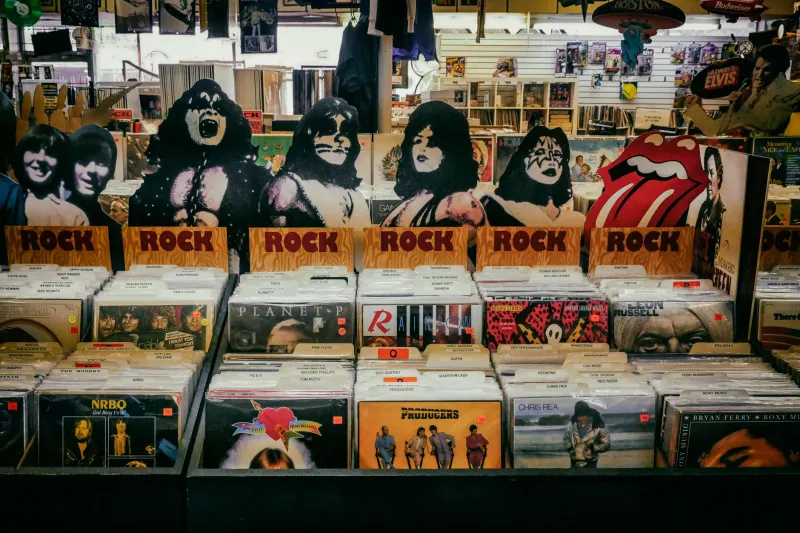
There's a record shop in Tokyo that you cannot find online. No website, no social media, no Yelp page, no pin on any map. The owner doesn't want to be named in this article — not the shop, not the neighborhood, not even the general area of the city. To find it, you need to know someone who's been there, and that person needs to trust you enough to tell you.
This isn't unusual. Across Tokyo's underground — from bars to event spaces to art studios to clothing collectives — a deliberate retreat from digital visibility is underway. And it's more organized, more intentional, and more philosophically considered than it might first appear.
The Decision to Disappear
For most small businesses in 2024, digital absence is a death sentence. No Instagram means no discovery. No Google listing means no foot traffic. The entire logic of modern commerce runs on visibility — the more surfaces you appear on, the more customers find you.
Tokyo's underground is betting against that logic. And some of them are winning.
"When I started the shop, I had an Instagram," says the record store owner, speaking through a mutual contact who arranged the conversation. "Within six months, the energy completely changed. People came in already knowing what they wanted to photograph. They weren't listening. They were performing listening."
So he deleted everything. Pulled the account. Took down the listing. Told his regulars in person, and let the rest of the discovery happen naturally.
"I lost maybe forty percent of my walk-in business immediately," he says. "But the people who still came — they were the right people. They came because they actually wanted to be there."
This kind of intentional friction — designing your space to be harder to find, not easier — runs counter to every piece of conventional business wisdom. But in a city where over-tourism and cultural homogenization have become genuine concerns, it's also a form of self-preservation.
Cash, No Receipt, No Record
The anti-digital ethos doesn't stop at social media. It runs through the entire transaction layer.
At underground events across Tokyo, cash is not just accepted — it's often the only option. No Venmo, no PayPal, no QR code payment systems that are otherwise ubiquitous in Japan. Cash only, no receipts, no records of who was there or what they spent.
This isn't primarily about tax avoidance, though that's a conversation people have quietly. It's about something broader: a refusal to generate data. Every digital transaction creates a record. Every record is potentially accessible. In an era of surveillance capitalism — where the behavioral data generated by a single credit card purchase can be sliced, sold, and analyzed in ways the buyer never consented to — cash is a political statement as much as a payment method.
"I don't want to know who my customers are in that way," says Keiko, who runs a small underground event series in Koenji. "I want to know them as people. Not as data points."
She books musicians through personal relationships, announces events through physical flyers distributed to specific people, and explicitly asks attendees not to post photos from inside the venue. Most comply. Some don't. She's made peace with the imperfect enforcement.
The Gentrification Algorithm
There's a practical dimension to all this that goes beyond philosophy.
In Tokyo — as in New York, London, and every other major city where this dynamic plays out — cultural spaces that go viral tend to gentrify and die on roughly the same timeline. A bar gets discovered on TikTok. It gets packed with tourists. Rents rise. The original community disperses. The bar either transforms into something unrecognizable or closes entirely.
Digital obscurity is, in this reading, a survival strategy. If the algorithm can't find you, the gentrification cycle can't reach you. Staying invisible is how you stay alive.
"Every space I've loved in this city that got famous online is gone now," says Hiro, a longtime Tokyo music scene participant who asked we not specify his age or neighborhood. "Every single one. I don't think that's a coincidence."
The correlation is hard to argue with. And it's pushed a lot of people who might otherwise have been neutral about digital presence into active resistance.
Is This Sustainable? Is It Even Real?
The skeptics have a point, though.
For all the principled rhetoric around analog culture and deliberate invisibility, there's something a little contradictory about a scene that's become known — at least within certain circles — for not being known. The record store with no online presence has been written about in three different underground publications. The cash-only event series has a reputation that travels through exactly the kind of word-of-mouth networks that, in 2024, often eventually find their way onto the internet anyway.
And some of what gets framed as anti-digital philosophy is also, let's be honest, aesthetic preference dressed up as politics. Vinyl sounds different from streaming. Handwritten flyers look cooler than Instagram graphics. The analog world has genuine sensory and social qualities that digital spaces don't replicate. You don't need a political framework to prefer it.
"I think some people are genuinely principled about this," says one Tokyo-based cultural critic who asked to remain anonymous. "And some people just like the vibe of it and have backfilled a philosophy. Both exist. It's fine."
What's harder to dismiss is the structural argument — that in a city with Tokyo's density of culture and history, the ability to maintain spaces that operate outside the attention economy is genuinely worth protecting. Not every room needs to be discovered. Not every moment needs documentation. Some things are better for being hard to find.
The record store owner, when asked if he worries about what happens when the people who know about his shop stop coming, pauses for a long time.
"I'll close," he says finally. "And that'll be fine. Everything closes eventually. At least it'll close as itself."