You're Not on the List — And Nobody's Going to Tell You Why
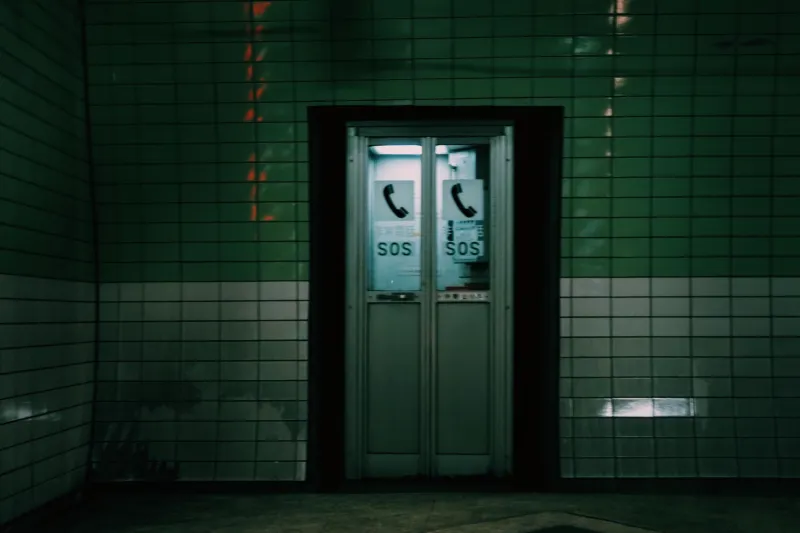
The bouncer doesn't say anything. He doesn't have to. A look — barely a second long — travels from your shoes to your face and back again, and then he just sort of... shifts. Blocks the doorway a little more. You get the message.
This is how rejection works in Tokyo's underground. No clipboard, no velvet rope, no explanation. Just a subtle recalibration of space that communicates everything without saying a word.
For outsiders — tourists, expats, even Japanese people from the wrong zip code — the social mechanics of underground Tokyo can feel genuinely baffling. You did your research. You dressed right. You knew the name of the DJ. And you still didn't get in. What happened?
It's Not a Dress Code. It's a Vibe Code.
Takashi, who manages a basement bar in Shimokitazawa that has no sign and no social media presence, has been doing this for eleven years. He's turned away hundreds of people. Maybe thousands. He doesn't keep count.
"People think it's about fashion," he says, sipping a canned coffee outside his venue on a Tuesday afternoon. "It's not. Fashion is easy. Anyone can Google what to wear."
What he's actually reading, he explains, is behavioral fluency. How do you walk into a space? Do you immediately pull out your phone? Do you talk too loud? Do you treat the bartender like a service worker or like a person? Do you understand that silence, in this context, is not awkward — it's respectful?
"There's a way people move when they belong somewhere," Takashi says. "And a way they move when they're visiting. I can tell in about thirty seconds."
This isn't unique to Tokyo, of course. Exclusive spaces everywhere have always operated on unspoken social contracts. But what makes Tokyo's underground particularly opaque to outsiders is that the codes aren't just cultural — they're hyperlocal. What works in one basement doesn't work two blocks away. Each space has its own micro-culture, its own internal logic, its own version of what "belonging" looks like.
The Regulars Who Made the Rules
Meet Yuki, 34, a graphic designer who's been part of the same underground electronic music community in Koenji for about six years. She didn't get in the first time she tried, either.
"I went with a friend who was already known there," she says. "But the connection wasn't close enough. The door guy knew my friend, but didn't know me, and my friend couldn't really vouch for me the right way."
The "right way," she explains, involves a kind of social collateral. It's not just knowing someone — it's having that person stake their own standing on your behalf. A casual "oh, she's cool" doesn't cut it. A genuine, relationship-backed endorsement might.
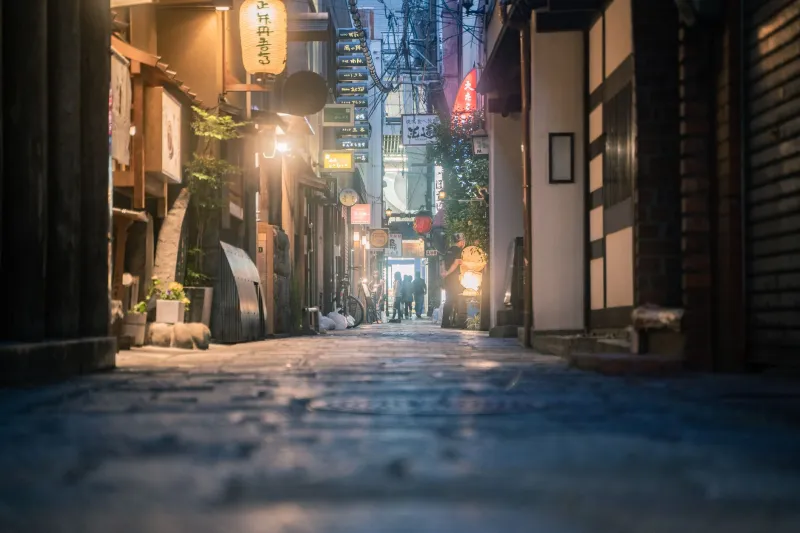
She went back three more times over the following months. Alone. Stood outside. Watched who came and went. Eventually started recognizing faces. Eventually started nodding. Eventually got nodded back at.
"I wasn't trying to infiltrate anything," she insists. "I just... showed up. Consistently. Without being weird about it."
That patience — the willingness to exist on the periphery without demanding access — is itself a form of cultural literacy. It signals that you understand the space has its own timeline, and you're not going to rush it.
When Gatekeeping Becomes Something Else
Not everyone is sympathetic to these systems. Marcus, a Black American musician who's been living in Tokyo for three years, has had experiences that felt less like cultural filtering and more like something uglier.
"I've been to spots where I knew the music, knew the scene, knew people inside — and still got turned away," he says. "And I've watched white guys who clearly had no idea where they were walk right in. That's not about vibe. That's about something else."
It's a tension the underground scene doesn't always want to sit with. The same insularity that protects a community from commercialization can also calcify into exclusion based on race, nationality, or other factors that have nothing to do with cultural literacy. Several people we spoke with acknowledged this problem exists, though most were reluctant to name specific venues.
"There's a difference between protecting a community and just keeping it homogeneous," says Kenji, a Tokyo-born DJ who runs events in Nakameguro. "Some spaces do the first thing. Some spaces think they're doing the first thing but are actually doing the second."
The Newcomer's Playbook (Such As It Is)
So what do you actually do if you want in? The honest answer is: slow down.
Every veteran of Tokyo's underground scene we talked to said roughly the same thing. Don't arrive with urgency. Don't perform your knowledge. Don't name-drop unless the person you're name-dropping can actually confirm you. Show up, observe, listen more than you talk, and treat every interaction — with the bartender, the coat check person, the random person standing outside smoking — as a real human exchange rather than a networking opportunity.
And maybe most importantly: accept that some spaces aren't for you, and that's okay. Tokyo's underground is not a theme park. Not every door is meant to open.
"The people I've seen get in the fastest," Takashi says, "are always the ones who seem least desperate to get in."
Make of that what you will.